Hindu Cultural Heritage Vishnu God and Servant

Hindu Cultural Heritage Vishnu God and Servant

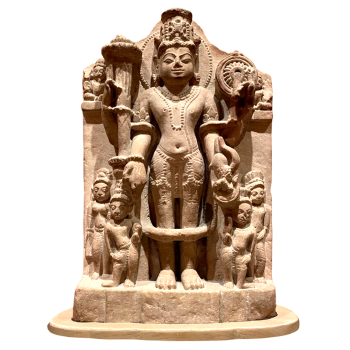
This is a statue of the god Vishnu and his attendants, dated from the 16th century AD, made of sandstone and produced in central India. The creator is unknown. The statue depicts a scene surrounded by the Hindu god Vishnu and his attendants, showing the loftiness and solemnity of religious art. Vishnu is one of the three main gods of Hinduism and is regarded as the maintainer of the universe.
Stone Lions in Patanduba Square, Kathmandu, Nepal

Stone Lions in Patanduba Square, Kathmandu, Nepal

This is a pair of lion statues located in Patan Durbar Square in Kathmandu, Nepal. These statues are located at the gates of the royal area and are one of the many historical monuments listed by UNESCO as World Heritage Sites. The word "Durbar" means "palace". Before the unification of Nepal, Patan was an independent kingdom, and the king of the time lived in this palace. Today, these lion statues stand on both sides of the entrance to the museum in Patanduba Square, symbolizing protection and majesty.
Hindu Heritage Krishna (Krishna) Bronze Statue

Hindu Heritage Krishna (Krishna) Bronze Statue

This is a bronze statue of Krishna (Krishna) from the southern Indian state of Tamil Nadu. According to the Indian epic Mahabharata (Mahabharata), Krishna is one of the incarnations of Vishnu. The statue was created between the 13th and 14th centuries AD and is currently in the collection of the Museum of World Cultural Ethnology in Barcelona. This statue reflects the high integration of exquisite metal craftsmanship and religious art in Tamil Nadu, and also bears witness to the prosperity of South Indian culture and belief in the 13th and 14th centuries.
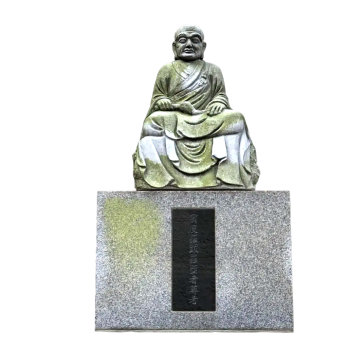
Vietnam during the Li Dynasty cultural relics occupy the city deification king statue

Vietnam during the Li Dynasty cultural relics occupy the city deification king statue

"Zhancheng Atheification of the King" was created in the late 10th century AD, made of sandstone. The statue is similar in style to the sculptures in ancient temple sites such as Mishan and Toyo in Vietnam's central highlands (south of Da Nang). As a classic representative of Zhancheng sculpture, this work of art has rarity and typicality. Zhancheng is a kingdom influenced by Indian culture that flourished in southern Vietnam between the 3rd and 15th centuries AD. The statue depicts a deified king who sits in a yoga-sitting position (Satvaparyankasava), holding a lotus flower with both hands outstretched.
Nepalese Cultural Heritage Bronze Lion Statues

Nepalese Cultural Heritage Bronze Lion Statues

In Nepal, these bronze lion statues usually guard the gates of temples or important religious sites, symbolizing majesty and guardian power.
Kathmandu District Shin Var Statue Big House Black Lion

Kathmandu District Shin Var Statue Big House Black Lion

This black lion guardian statue is a representative of the local cultural heritage, beautifully made and has a long history. It is part of Kathmandu's "Newar" culture, and the New Wares are historical residents here, as well as devout Buddhists. This type of monastery is often referred to as the "Grand Mahavihara" ("Grand House") and is usually built in a courtyard. According to records, most of these monasteries were built between the 12th and 15th centuries. Over time, some of these places gradually dilapidated, but the temple was well restored in 1979 through Japanese funding. The majesty and majesty of the statue symbolizes protection and protection.
Gilded Stone Carving of Hindu Elephant Head God

Gilded Stone Carving of Hindu Elephant Head God

The elephant-headed god, Ganisavan, Ganesha in name, Ganapati, is the god of wisdom and the god of breaking down obstacles in Hindu and Hindu mythology. It is a combination of the wisdom of man and the elephant, especially the Shiva and Vishnu sects of Hinduism. Because it is a group of small gods (Gana) who are good at serving Shiva, it is also called "group masters", that is, the Lord of Gana. Its shape is like a person with a big belly and a single tooth. It holds an axe, candy, rosary and lotus. Its long teeth have great divine power. A single blow will turn Gachamuha into a giant mouse and its mount. His character is kind and kind, but he is brave and firm in war.
Eighteenth-century pottery sculpture "The Declining Macaw"
Eighteenth-century pottery sculpture "The Declining Macaw"

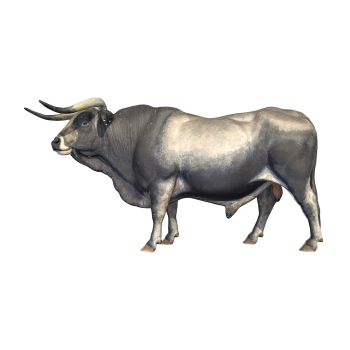
The Sliding Macaw, produced by John Joachim Candler at Mason in May 1732. Porcelain, no coloring. The sculpture shows a macaw hanging upside down from a tree trunk, vividly recreating the bird's natural form. The work is currently in the porcelain collection of the National Art Collection (Staatliche Kunstsammlungen Dresden) in Dresden.
1889 Cast Iron Sculpture of a Male Buffalo

1889 Cast Iron Sculpture of a Male Buffalo

Statue of St. Gurdade in the Church of Tynitz Abbey

Statue of St. Gurdade in the Church of Tynitz Abbey

This statue of St. Gectree is one of two statues decorated on the side altar of St. Scolastika in the Church of the Monastery of Tynic, which is currently in the collection of the Benedictine Monastery Museum of Tynic. St. Geradet was a Catholic saint, noted for his religious contributions and a devout lifestyle. This sculpture shows her image, reflecting the artistic style and religious beliefs of the 18th century. The exquisite craftsmanship and meticulous details of the sculpture reflect the craftsman's skills and artistic aesthetics at that time. This sculpture is not only of religious significance, but also represents the cultural and historical background of that period.
August III expedition statue

August III expedition statue

The statue is located in the Neustadt district of Dresden, Germany, near the Auguste Bridge, where Elector of Saxony and King Frederick August II of Poland, also known as Auguste III, rides on a leaping horse. The statue sits on a building pedestal decorated with scrolls and kartushes (scrolls). The statue shows the knight sitting deep on the horse. The king wore the uniform of the Roman leader and had his hairstyle in the fashion of the 18th century.
18th century statue of Auguste III Wetin

18th century statue of Auguste III Wetin

The statue is displayed in the National Art Collection at Wawel Royal Castle. Auguste III Weiting was the king of Poland and Lithuania who had an important influence on Polish history during his 18th century reign. The statue was carved in the Classicist style using porcelain. Wawel Royal Castle is one of the most important historical and cultural sites in Poland, with a large collection of precious works of art and historical artifacts. This statue is one of the important collections, showing important figures and artistic styles in Polish history.
Bronze statue of "Wild Boar"

Bronze statue of "Wild Boar"

This "wild boar" statue is a plaster model of an ancient statue in the collection of the Museum of the Academy of Fine Arts in Krakow. It is a replica of an ancient statue in the Uffizi Gallery in Florence. This marble boar statue is from the Roman period and is a copy of a lost Hellenistic original, probably by artists from around the famous sculptor Lisipos (Lysippos). This Roman boar statue was presented by Pope Pius IV to Cosimo I de Medici, Duke of Tuscany.
"On the Road" Plaster Statue

"On the Road" Plaster Statue

The statue is a famous piece of art in the National Museum in Krakow. The statue, made of stained plaster, depicts a scene of a horse pulling a carriage, showing life in the 19th century. The details of the statue are very delicate, and the form of horses and carriages is lifelike, as if on the march. This artwork not only shows the transportation of the time, but also reflects the social life and cultural background of that time. Through this statue, the Krakow National Museum shows the audience the daily life and artistic style of the 19th century, so that people can better understand the history and culture of that era.
18th Century Indian Elephant Statue

18th Century Indian Elephant Statue

Andrzej Tadesh Bonaventura Kostchusko Monument in Washington

Andrzej Tadesh Bonaventura Kostchusko Monument in Washington

Andrzej Tadus Bonaventura Koschuszko; February 4, 1746-October 15, 1817), a translation of Kochuszko, the leader of the Polish army, Poland, Lithuania, The national hero of Belarus and the United States, served as the supreme commander of the national armed forces and led the Kochuszko uprising against the Russian Empire and the Kingdom of Prussia. He fought in the American Revolutionary War as a colonel in the Continental Army before leading the 1794 uprising. In 1783, the Continental Congress promoted him to brigadier general in gratitude for his devotion to the Continental Army, and Koschusko became an American citizen.
Eighteenth-century Polish sculpture of a winged cavalry on horseback

Eighteenth-century Polish sculpture of a winged cavalry on horseback

The winged cavalry on horseback was an elite cavalry unit during the Polish and Lithuanian Commonwealth, and these cavalry were known for their unique fighting style and equipment. Winged cavalrymen usually ride on top of their warhorses in armor decorated with metal pieces and feathers.
Statue of Goddess Tralock

Statue of Goddess Tralock

In Aztec culture, the name of Chalchiutlikue means "the woman in the jade dress", and she is not only Trellock's wife, but is sometimes considered his sister. Her image often appears in water-related sculptures and artifacts, symbolizing the vitality and purifying power of water. These sculptural artifacts usually show her wearing an ornate jade skirt, symbolizing her deep connection to water. She is believed to be able to trigger storms and whirlpools, protect navigators, and is worshipped in agricultural rituals as a goddess who can make the land fertile.
William III Statue

William III Statue

William III (William III, 4 November 1650-8 March 1702), also known as William of Orange, was king of the Netherlands, England, Scotland, and Ireland. He ascended to the throne of England in 1689 through the "Glorious Revolution" and ruled with his wife Mary II until her death in 1694. In 1688, William III launched the "Glorious Revolution" with the support of the English nobility, overthrowing his father-in-law James II and becoming king of England, Scotland and Ireland. His rule marked the triumph of Protestantism and parliamentary power.
Grigore Kobaltescu bust

Grigore Kobaltescu bust

Gregoré Kobarzescu is a famous Romanian geologist and paleontologist, known as the founder of Romanian geology and paleontology. The research of Grigore Kobalzescu not only laid the foundation of Romanian geology and paleontology, but also provided unique insights into petroleum geology. His work had a profound influence on later scientific research.
Crazanne Statue

Crazanne Statue

Crazanne statues are marble statues of indigenous deities collected in the Louvre.
EarthSong statue-Miloš Axman

EarthSong statue-Miloš Axman

Created in 1986 by Czech artist Miloš Axman, this sculpture uses sandstone as the material. Located in the Kohoutovice district of Brno, Czech Republic, this sculpture is not only one of the masterpieces of his artistic career, but also an important cultural landmark of the region. Known for his outstanding contributions to the art of sculpture, his work covers a wide range of areas from small interior works to large monumental sculptures. With its unique artistic style and profound cultural connotation, it has become an indispensable part of Brno's urban landscape.
Stone Statues of Marta

Stone Statues of Marta

It is a statue in Brno, Czech Republic, known for its early Classical style and residual Rococo elements. Dating back to 1789, it is an important cultural symbol and historical witness. Appreciated for its artistic value, it is also valued for its environmental shaping role in the city park, which is located in front of the Mitrovsky summer house. It not only provides an aesthetic enjoyment for the citizens and tourists of Brno, but also gives people a glimpse of the artistic style and cultural atmosphere of that era. As a historical relic, it bears witness to the rich historical and cultural heritage of Brno and the entire Czech region.
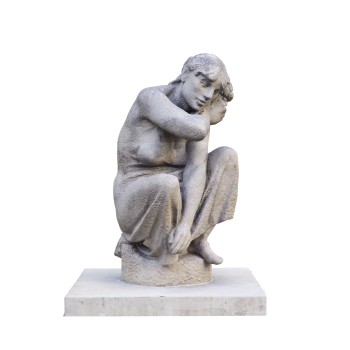
Stone carving of the girl after bathing-

Stone carving of the girl after bathing-

It is a sandstone sculpture created in 1960 by the Czech sculptor. Known for its naturalistic style and delicate capture of female form, it shows the relaxed and pure state of women after bathing. The girls in the sculpture have different postures, revealing a quiet and introspective atmosphere, in harmony with the surrounding natural environment. Located in the park on the 28th of October square in the Černépole of Brno, this sculpture has become a striking symbol of the region, a Brno cultural landscape that attracts the attention of tourists and local residents.